7 Reasons Your Dark Spots Keep Coming Back (Number 2 Is Why Most Nigerian Women Give Up)
Nigerian women spend more on their faces than almost anyone will admit out loud. Jars, mixes, soaps, serums, “special” creams from someone who knows someone. And still the patches sit there — around the mouth, on the cheeks, along the jaw where the pimples used to be.
Here is what is actually going wrong.
1
You were sold bleach, not treatment
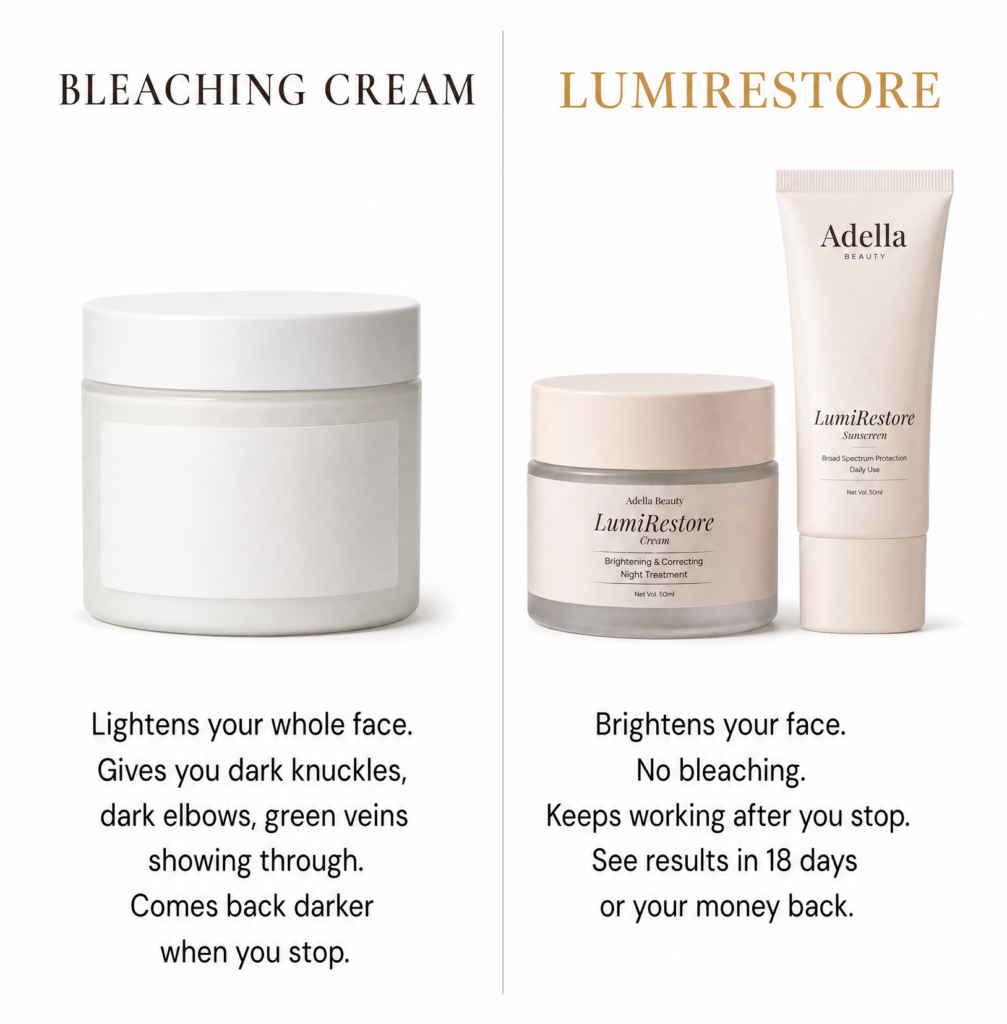
A very large share of what is sold here as “brightening”, “toning” or “glowing” does not correct dark spots at all. It strips colour out of the entire face.
For a few weeks it looks like progress. Then the neck stops matching. The knuckles darken. The skin thins out until you can see the veins, and it starts burning in ordinary afternoon sun. The patches are still there underneath — now on damaged skin.
What to do instead: use something that corrects pigment and leaves your natural colour alone. If a product cannot tell you what is inside it, it is not going to tell you what it is doing to you either
2
You stopped on day 10
This is the one that quietly ruins everything.
Real pigment correction is not fast. The dark patch is not sitting on the surface waiting to be wiped off — it is pigment your skin produced underneath, and it has to be broken up and carried away layer by layer. Most women see clearly visible change around day 18.
So when a woman quits on day 10 and switches to a different product, she restarts the clock at zero. Do that four times in a year and you have spent ₦100,000 and never once completed a correction cycle.
What to do instead: pick one product and give it 19 days without switching. Take a photo on day 1 in the same light, same spot. You will not trust your memory later.

3
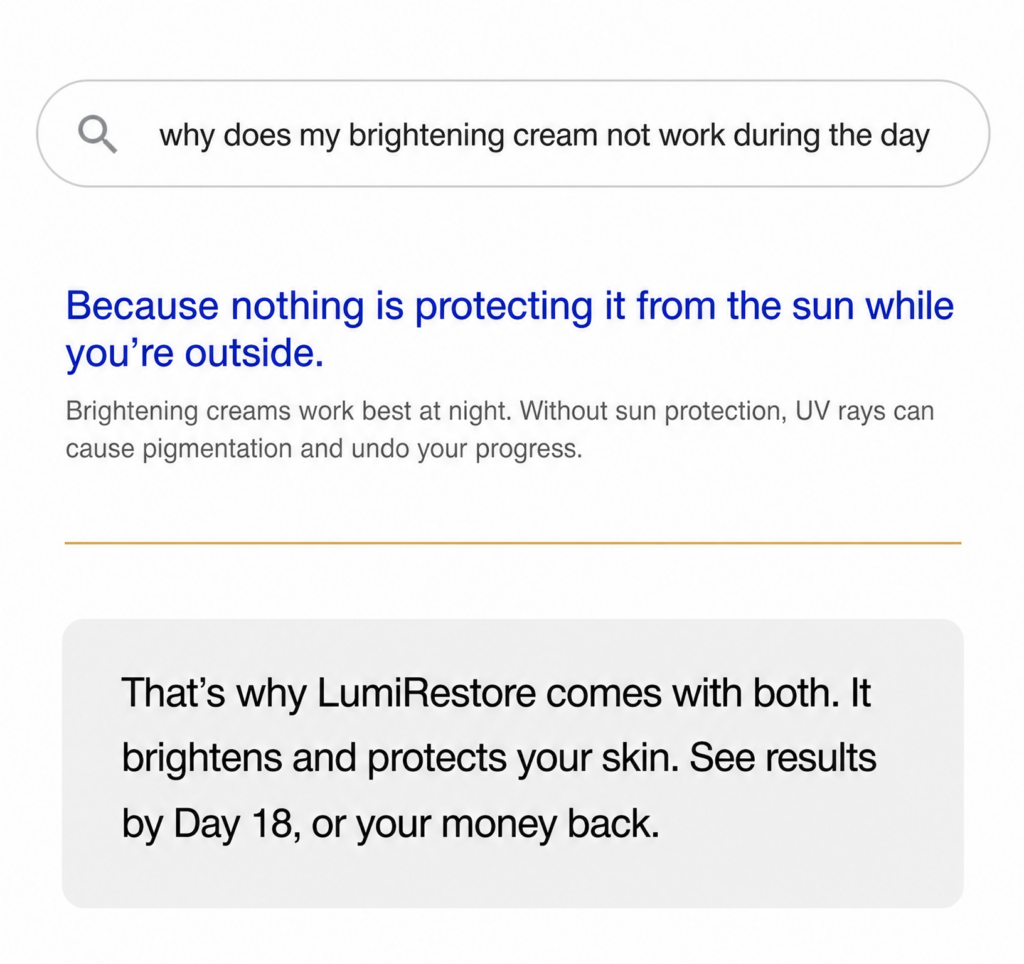
Nothing is protecting your face during the day
You can use an excellent night cream and see almost nothing — because every hour in the sun undoes the work.
Traffic on Third Mainland. Twenty minutes waiting for a bike. Standing outside your shop. Sun through a car window still counts. If the daytime side is unprotected, you are repairing at night and re-damaging by 2pm.
What to do instead: wear a day cream every morning that also protects from the sun. The trick is treating it as your morning cream, not as an extra optional step — nobody keeps up an extra step
4
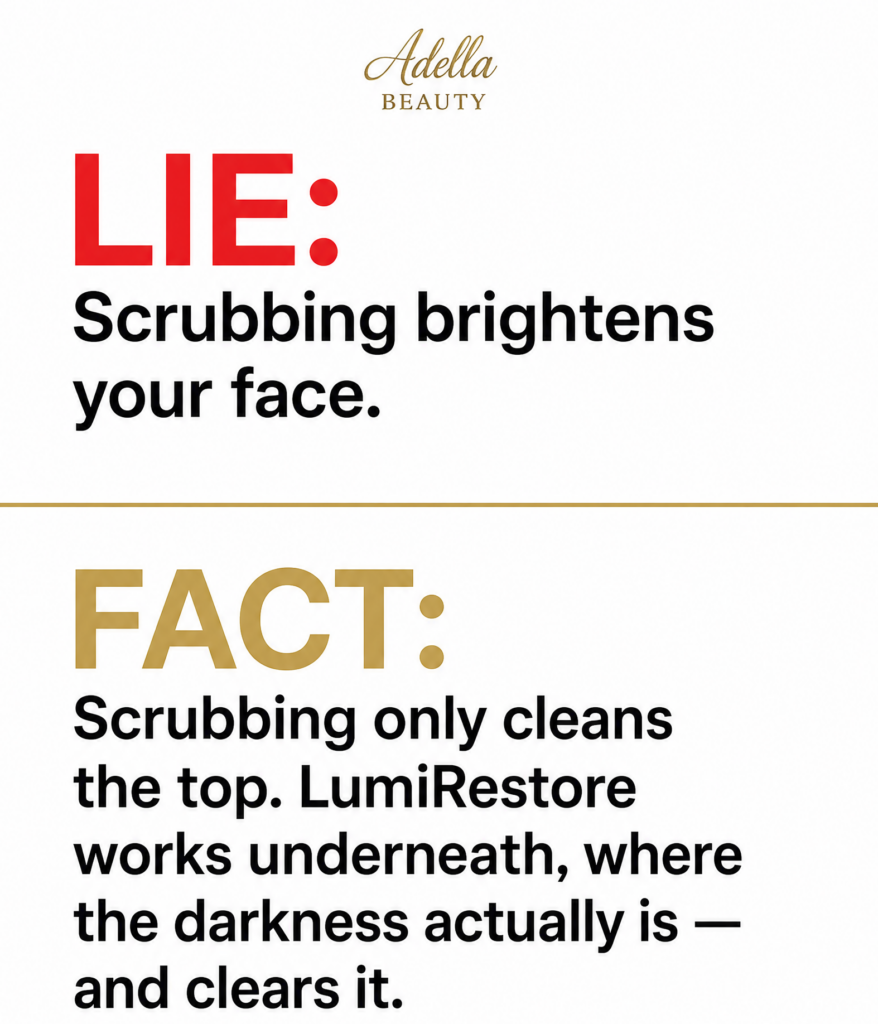
You have been scrubbing a barrier that is already damaged
Harsh scrubs, strong exfoliants, sponge and stone in the bathroom — it feels like you are doing something. What you are doing is wearing down the barrier that holds moisture in and irritation out.
A damaged barrier reacts to everything, gets darker where it is irritated, and heals badly. Which produces more marks. Which prompts more scrubbing.
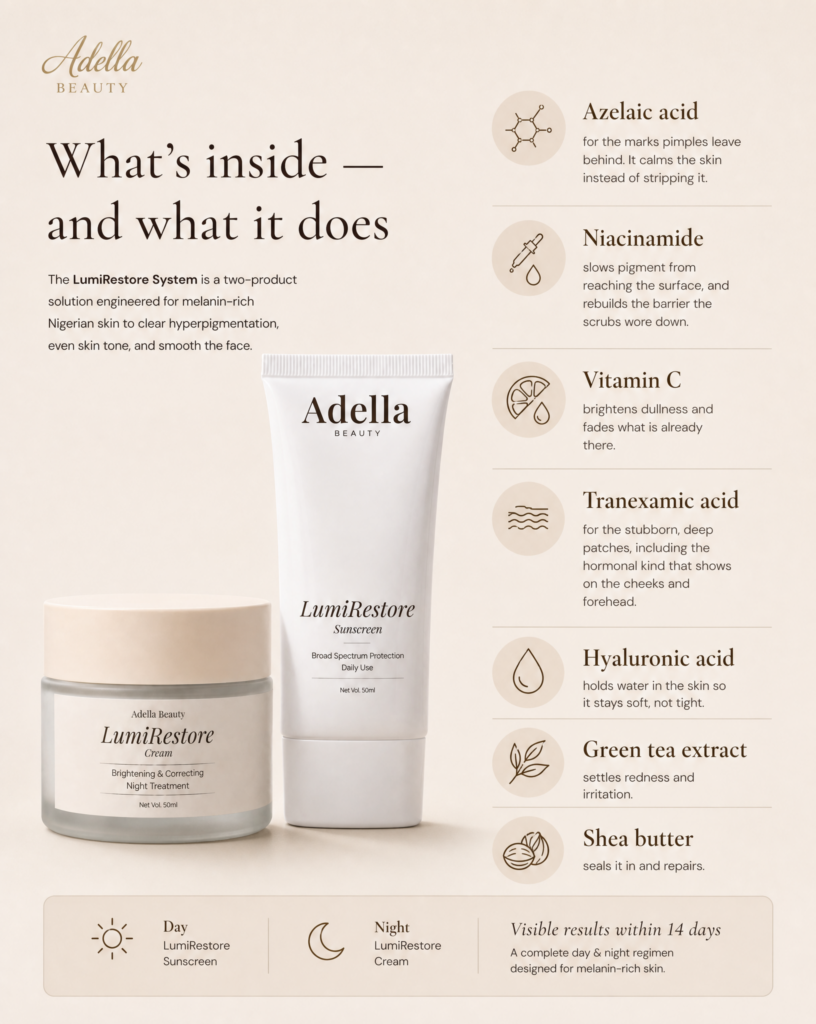
What to do instead: repair before you correct — or use something that does both at once. Niacinamide, shea butter and green tea rebuild the barrier while the correcting ingredients work on the spots.
5
The product had the fashionable ingredient on the label and nothing behind it
Because women got smarter and started reading ingredient lists, a lot of brands got smarter about printing ingredient names on boxes. The name became the marketing. What is in the jar did not change.
What to do instead: ask what percentage, and ask what it is for. A brand that formulated the product on purpose can tell you what every ingredient is doing. A brand that printed a box cannot
6
You treated the spot and ignored what caused it
Dark patches have sources. Pimples that healed badly. Hormones and pregnancy. Heat and friction. Sun.
Dab cream on the visible patch and you have addressed today’s spot while the process that produced it is still running. Two months later there are new ones in new places, and you conclude the product failed.
What to do instead: apply across the whole face, not just on the marks, and use something that slows pigment production rather than only fading what is already visible.
7
You were afraid to buy anything at all — and that is not irrational
Almost every Nigerian woman knows someone visibly damaged by a bleaching cream. Add fake and expired imported products in the market, and hesitation is a sensible response.
But careful and stuck are different things. Careful means you check what is inside, buy from the brand rather than a reseller, pay on delivery so you see the product first, and only buy where you can get your money back if it does nothing
What a routine that actually works looks like
Two creams. One at night to correct, one in the morning to protect.
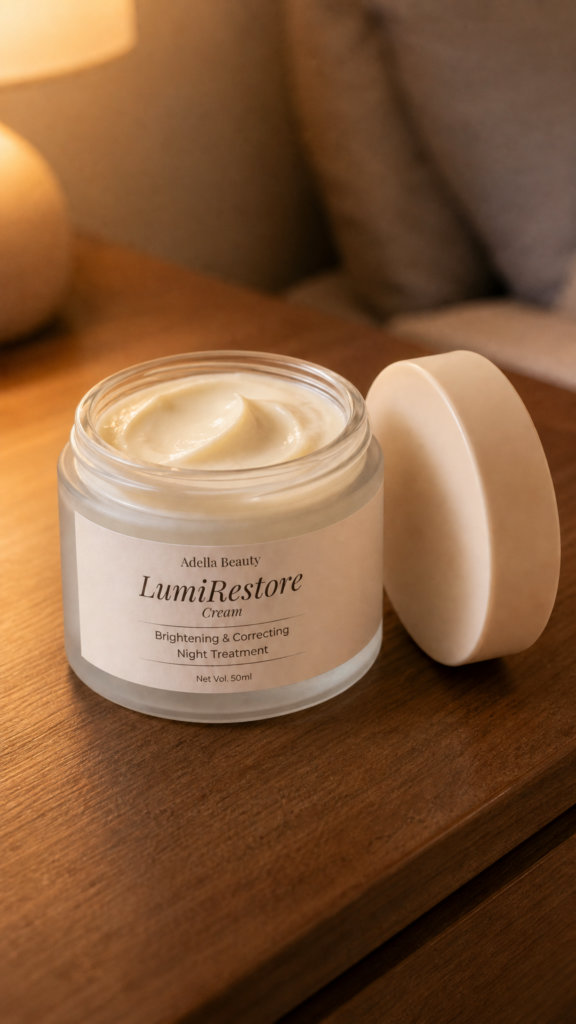
That is what Adella Beauty built LumiRestore around. The night cream is a Korean-formulated brightening and correcting treatment containing azelaic acid, niacinamide, vitamin C, tranexamic acid, hyaluronic acid, green tea extract and shea butter — correcting ingredients and barrier-repair ingredients in the same jar, with no bleaching in it. It evens your face back to your own natural tone. It does not take you past it.
Every order includes a free LumiRestore day cream with SPF50 protection, so the morning half is handled and the sun stops erasing your progress.

₦23,500 for both. You pay the rider when they arrive — nothing upfront.
And the 19-Day Promise: use both creams for 19 days, and if you see no progress, we send a rider at our own cost to collect them and refund you in full. Nineteen days, because visible results show around day 18.